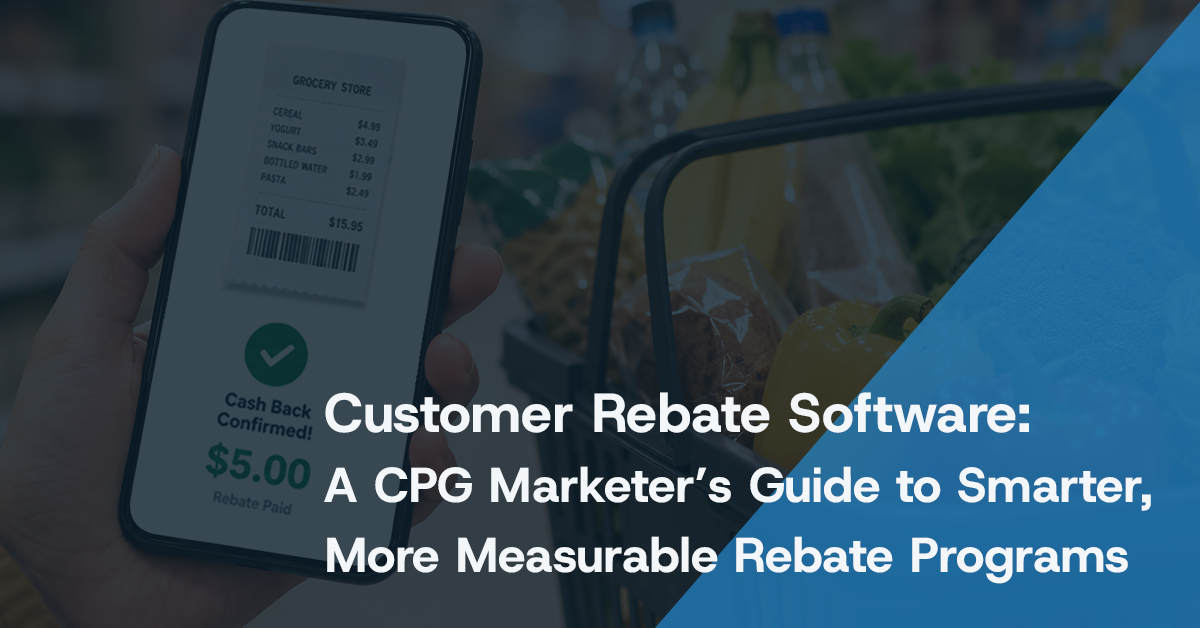
The rebate is easy. Managing it at scale isn't.
Designing a rebate is the simple part. A brand picks a qualifying product, sets a dollar amount, and decides how the reward gets paid out. For CPG brand marketers and shopper marketing leaders, rebates are a proven way to encourage trial of a new product, drive incremental purchase during a promotional window, compete on value without cutting list price, support a launch, or nudge shoppers toward a specific SKU over a competitor's.
The complexity shows up the moment a single-market pilot becomes a national program. Multiply one offer across dozens of SKUs, hundreds of retailers, several qualification rules, and three or four payout methods, and the rebate itself is no longer the hard part. Managing it is.
That shift matters more than ever now that rebates have moved from a nice-to-have to a purchase driver. In Snipp's 2026 back-to-school consumer survey, 80.6% of shoppers said they would switch brands for a meaningful discount, cashback offer, or rebate, and 71.3% said value now outweighs brand loyalty in their purchase decisions. When a rebate carries that much weight in the purchase decision, the technology behind it, not just the offer itself, determines whether the program actually delivers.
Why CPG brands are rethinking consumer rebate programs
Several forces are pushing CPG marketers to take a harder look at the platforms running their rebate programs.
Consumers are more deliberate about value than they were even a year ago. Snipp's back-to-school data found that 74% of shoppers are putting more effort into finding deals than they did the previous year, and NielsenIQ's 2026 Pricing Under Pressure analysis found that 68% of consumers now see private label as a viable alternative to name brands. At the same time, NielsenIQ reports that global CPG value growth (1.8%) is outpacing unit volume growth (0.7%), meaning shoppers are paying more per trip rather than buying more. Brands that compete purely on blanket discounts are giving up margin in a market where volume isn't following.
That pattern shows up in the sales data too. Circana's June 2026 retail tracking found U.S. dollar sales up 2.7% year-over-year while unit demand fell 0.9%, and reported that early-summer promotional events delivered a smaller sales lift than comparable events in prior years. Generic, calendar-driven promotions are producing diminishing returns. Brands need mechanics that target the incentive to a specific, verified purchase rather than discounting broadly and hoping units follow.
A rebate, unlike a straight price cut, lets a brand target the incentive at a specific purchase and still collect first-party data in return. But that only works if the underlying platform can prove the purchase happened and report on it. Marketing operations and shopper marketing leaders are also under pressure to prove incremental sales and promotion ROI to their own leadership, not just distribute rewards. And as programs expand across multiple retailers, SKUs, and markets, manual claim review becomes an operational bottleneck: someone has to eyeball receipts, catch duplicates, and reconcile payouts by hand. That overhead, combined with the budget lost to fraudulent and duplicate claims, is exactly what pushes teams to look for software built for scale rather than a single campaign.
What is customer rebate software?
Consumer rebate software manages the end-to-end rebate process, from the moment an offer is configured to the moment a marketer reports on what it delivered:
- Offer setup and qualification rules
- Consumer submission
- Receipt or transaction processing
- SKU-level purchase validation
- Fraud detection
- Claim approval
- Reward fulfillment
- Reporting and analytics
Within that category, it's worth separating two things that often get marketed as the same thing. Customer rebate tracking software tells a marketer what has been submitted: how many claims came in, what stage they're at, how many are pending. Customer rebate processing software goes further. A true rebate processing platform validates whether the purchase actually qualified, checks whether the claim is legitimate, confirms what was actually bought, and reports on what the program is delivering in terms of real sales. Tracking claims is administrative. Processing and validating them is what protects the budget and produces data a brand can act on.
7 capabilities to look for in CPG rebate software
1. SKU-level purchase validation
A rebate is only as good as the proof behind it. Rebate software should validate the actual product purchased against the offer's qualification rules, not just accept a submitted claim at face value. Look for support for multiple qualifying products, quantity thresholds, spend thresholds, multiple purchases over time, cross-purchase requirements (buy Product A and Product B together), and purchases across multiple retailers. Snipp's rebate platform supports single purchases, multiple purchases over time, spend and quantity thresholds, and cross-purchase and purchase-frequency rules, so brands can build the exact qualification logic a campaign needs rather than settling for whatever a generic template allows.
2. Automated customer rebate processing
Manual review doesn't scale past a handful of markets. Look for digital rebate software that automates submission intake, purchase validation, approval, and fulfillment as one connected workflow instead of a series of manual handoffs. Automation is also what makes fast payout timelines realistic; a platform that still routes claims through manual review at any stage will bottleneck the moment volume increases.
3. Flexible reward fulfillment
Consumers expect choice in how they get paid. Strong rebate processing platforms support prepaid cards, PayPal or Venmo transfers, retailer gift cards, digital rewards, and physical rewards, ideally from a single configuration rather than separate integrations for each payout type.
4. Real-time reporting and purchase intelligence
This is where most point solutions fall short. Basic tracking tools report on the funnel of claims submitted, claims approved, and dollars paid. A modern CPG rebate management platform should move beyond that funnel entirely, reporting on verified purchases by SKU, by retailer, by basket, and by consumer behavior, so marketers can see what the campaign actually did to sales, not just what it cost. Snipp's platform captures purchase-level data including SKU information, store performance, member details, and basket-level analysis, turning every rebate submission into a data point rather than just a line item on a payout report.
5. Multi-retailer, multi-market, and multi-SKU support
National CPG programs can't control where a consumer shops. Rebate software needs to validate purchases regardless of retailer, support multiple currencies and markets for brands running programs beyond a single country, and handle multiple SKUs and product lines within a single offer structure.
6. Integrations
A rebate platform that sits in isolation limits what a brand can do with the data it generates. Look for integrations with CRM and CDP platforms, marketing automation and campaign tools, rewards and payout infrastructure, retailer data sources, and open APIs so the rebate program can plug into the broader martech stack rather than becoming a data silo.
7. Fraud prevention
Fraud protection needs to be built into the workflow, not bolted on after the fact. It's significant enough that it deserves its own section.
Fraud: the hidden cost of poorly managed rebate programs
Rebate fraud takes several forms: duplicate submissions of the same receipt, receipts reused across multiple claims, altered or manipulated receipt images, claims submitted against purchases that don't actually qualify, multiple claims filed against a single transaction, and coordinated fraud rings submitting volume claims across fake or repeated identities.
The important distinction is when a platform catches it. A rebate platform that only flags fraudulent claims after the payout has gone out has already lost the budget; at that point, recovery is a manual, often unsuccessful, chase. A platform built to prevent fraud stops the fraudulent claim from becoming a payout in the first place, checking the claim before funds move rather than auditing after.
That kind of prevention depends on receipt validation and fraud detection working together, not as separate tools bolted onto a rebate workflow. Snipp's platform integrates rebate processing with its own receipt processing technology for automated, SKU-level receipt validation, and uses CORRAL, its AI-powered fraud detection engine, to monitor activity from signup through redemption. CORRAL applies machine learning and real-time monitoring, along with a customizable rules engine, to flag duplicate submissions, altered receipts, and suspicious claim patterns before they're approved, rather than relying on a single after-the-fact audit.
Consumer rebate software should connect incentives to verified purchases
The traditional rebate model is linear and ends at the payment: offer, submission, manual processing, payment. The data stops the moment the check clears or the card loads.
A modern CPG rebate model looks different. It runs from offer to purchase, into receipt or transaction data, through SKU-level validation and fraud detection, out to the reward, and finally into purchase intelligence the brand can actually use. The reward is still the consumer-facing part of the program, but it's no longer the end point for the brand.
That's the real shift underneath rebate software for CPG brands: the rebate itself becomes a mechanism for generating verified purchase data, not simply a line item on a promotional budget. Every validated claim confirms a real sale, at a real retailer, of a real SKU, tied to a consumer who opted in. Handled well, a rebate program produces the kind of first-party purchase intelligence that CPG marketers are otherwise struggling to get as retail media data gets harder to access and more expensive to buy.
CPG rebate examples: how brands use rebates to drive measurable outcomes
Arm & Hammer ran a digital rebate program on its cat litter line, offering a $6 digital prepaid card to consumers who spent $20 on qualifying products and submitted a receipt. The low-friction structure, receipt submission paired with instant digital fulfillment, was built to drive awareness, trial, and repeat purchase in one motion.
Suntory Global Spirits -Jim Beam) used an on-premise rebate to drive fall sales, offering consumers a Venmo rebate of up to $10 for purchasing two qualifying Jim Beam and lemonade drinks at bars and restaurants, paired with a friend-focused mechanic to encourage shared occasions.
brüst at Costco paired a Costco.com purchase with a $5 Venmo rebate to drive trial through a major retail partner, combining receipt validation with fast digital fulfillment.
Splenda gave consumers a choice between a $5 PayPal rebate or a $5 digital barcode coupon after a short quiz experience, letting the brand gather preference data alongside driving trial.
Perrigo used a rebate of up to $20 via Venmo to drive trial and adoption of its store brand infant formula among first-time mothers, a category where purchase validation and a trustworthy claims process matter as much as the incentive itself.
How to evaluate customer rebate software
Once a shortlist of vendors is on the table, these questions separate consumer rebate management software built for CPG scale from a point solution wearing rebate branding:
- Can the platform validate purchases at the SKU level?
- Can it support multiple retailers without requiring retailer-by-retailer integrations?
- Can qualification rules be configured without custom development?
- How does the platform identify duplicate or fraudulent claims, and at what stage?
- How quickly can claims be processed and paid out?
- What reward options are supported, and how are they fulfilled?
- Can the platform integrate with our CRM, CDP, and marketing stack?
- What purchase data can marketers actually access and export?
- Can the platform support programs across multiple markets?
- How does the provider handle compliance, security, and data protection?
- Can the platform scale when submission volumes spike?
- Can we manage multiple rebate programs from one platform?
For a deeper, RFP-ready version of this evaluation, see Snipp's guide: CPG Rebate Platform RFP: The 10 Questions You Must Ask Before You Sign.
Key takeaways
- Consumer rebates are increasingly used as targeted value incentives, not simply discounts.
- CPG Customer rebate software should automate the full journey from submission through fulfillment.
- SKU-level validation is critical for proving that qualifying products were actually purchased.
- Fraud prevention should be built into the rebate workflow, not applied after payouts go out.
- The most valuable platforms turn rebate transactions into actionable purchase intelligence.
What's Next
If you are evaluating rebate programs or building the internal case for investment, here are your next steps:
- Keep learning: Read Rebate Marketing in 2026: Trends, Challenges and What's Working Now for more insights into how brands are using rebates to drive measurable results.
- Explore the solution: Download Snipp's Digital Rebate Management solution sheet to see how Snipp's Digital Rebate Management Platform helps CPG brands manage consumer rebates from offer setup and purchase validation through fraud detection, reward fulfillment, and reporting.
- Request a demo: Talk to a Snipp specialist about your specific channel or consumer program requirements.
Ready to build a more measurable rebate program?
The right rebate platform should do more than process claims. It should help you validate purchases, protect your budget from fraud, simplify fulfillment, and turn every qualifying purchase into actionable data. Talk to the Snipp team about your objectives, qualification rules, retailers, rewards, and reporting requirements.
Frequently asked questions
What is consumer rebate software?
Consumer rebate software manages the full rebate lifecycle for CPG and retail brands, including offer setup, consumer submission, receipt or transaction validation, fraud detection, claim approval, reward fulfillment, and reporting.
What is the difference between rebate processing software and rebate tracking software?
Rebate tracking software reports on claim status. Rebate processing software validates whether a purchase actually qualified, checks the claim's legitimacy, and confirms what was purchased before fulfilling the reward.
How does rebate software validate purchases?
It validates purchases by matching submitted receipts or transaction data against an offer's qualification rules, confirming the product, quantity, spend, and retailer before approving a claim.
Can rebate software validate purchases at the SKU level?
Yes, in platforms built for CPG programs. SKU-level validation confirms the exact qualifying product was purchased, rather than approving a claim based on a general receipt match.
How does rebate software prevent fraud?
Leading platforms combine automated receipt validation with AI-powered fraud detection that monitors submissions in real time, flagging duplicate receipts, altered images, and suspicious claim patterns before a reward is paid out.
Can CPG brands run rebates across multiple retailers?
Yes. Rebate software built for national CPG programs validates purchases regardless of retailer, which matters because brands can't control where consumers choose to shop.
What types of rewards can consumer rebate software support?
Common options include prepaid cards, PayPal or Venmo transfers, retailer gift cards, bank transfers, digital rewards, and physical rewards.
What data can CPG marketers get from a rebate program?
A modern platform can report on verified purchases by SKU, retailer, basket composition, and consumer behavior, turning rebate submissions into purchase intelligence rather than just payout records.

Subscribe for updates straight to your inbox