Do you know the difference between sweepstakes and raffles?
Many marketers use the terms interchangeably. But despite some similarities, they serve distinct purposes and operate under separate legal frameworks.
To choose the right strategy for your next brand promotion, it's essential you understand these differences.
Sweepstakes vs. Raffles
What are Sweepstakes?
Sweepstakes are promotional games of chance that give participants the chance to win prizes for performing simple actions. For example, buying a product, writing a review, or sharing content on social media. Winners are selected at random from the pool of eligible players.
Unlike lotteries and similar promotions, sweepstakes must adhere to the No Purchase Necessary law. This stipulates that you must provide participants with a free, alternative method of entry (AMOE) that offers the same odds of winning as paid entries. Because of this, the law recognizes sweepstakes as legitimate promotional marketing tools rather than a form of regulated gambling activity.
What are Raffles?
Raffles are also games of chance in which winners are drawn at random. However, the key difference is that participants pay to enter – typically by purchasing tickets. As such, raffles are classified a form of gambling under federal law.
Most states only permit licensed charities and nonprofits to run raffles, the idea being that a percentage of every ticket sale goes to the supported cause. Even so, many require special permits, bonding, and tax filings to qualify. Some states prohibit raffles entirely, making them largely inaccessible for commercial brand promotions.
Sweepstakes vs. Raffles in a Nutshell |
||
|
|
Sweepstakes |
Raffles |
|
Definition |
Chanced-based promotions with random winner selection |
Pay-to-enter games of chance with random winner selection |
|
Who they're for |
Brands |
Charities and nonprofits |
|
Entry method |
Can be paid or free, but must include a non-purchase entry option |
Paid |
|
Legal classification |
Promotional marketing |
Gambling (regulated activity) |
|
Geographic restrictions |
Minimal, though laws vary by country and state |
Prohibited in many states |
|
Primary purpose |
Brand awareness, consumer engagement |
Fundraising |
|
Regulatory requirements |
FTC guidelines, state-specific bonding and registration |
Gambling licenses, permits, tax registration |
|
Winner selection |
Random – equal odds regardless of participation level |
Random – multiple entries possible through additional purchases |
|
Commercial viability |
High (legal for businesses) |
Low (largely restricted to licensed nonprofits) |
Sweepstakes Unpacked
Sweepstakes offer a flexible way to build buzz, capture attention, and drive engagement – without asking for much in return from participants.
From simple entry forms to more creative, interactive formats, there’s a wide range of approaches to consider. Understanding the pros and cons, available options, and how real brands use them today reveals just how versatile sweepstakes can be.
Advantages
- Low barrier to entry: with diverse entry methods that don’t require consumers to spend, sweepstakes are great at generating engagement.
- Brand awareness: Sweepstakes generate buzz and excitement around your products or services while providing valuable consumer data that supports future marketing.
- Broad audience reach: Because they’re legal in most states, sweepstakes enable you to reach a wide audience for minimal effort.
Challenges
- Brand loyalty: Consumers associate sweepstakes with large, desirable prizes. As such, they often attract people interested in the offer rather than your brand.
- Compliance requirements: Although they’re less regulated than raffles, sweepstakes must still comply with various laws and regulations – including state-specific bonding requirements.
- Administrative complexity: Managing entry collection, winner selection, prize fulfilment, etc. can be extremely time-consuming – especially if you don't have specialized sweepstakes administration software.
Types of Sweepstakes
Online Sweepstakes
Digital platforms allow for seamless entry collection and broad reach. Participants typically complete web-based forms or engage through a brand website or promotion-specific microsite.
Social Media Sweepstakes
Social media sweepstakes use social platforms for viral growth through likes, shares, and user-generated content (UGC). According to recent data, 68% of U.S. consumers participated in social media contests or sweepstakes in 2023 – a 13% increase from 2021.
Members-only Sweepstakes
Running exclusive promotions for loyalty program members enables you to reward existing customers while giving non-customers a compelling reason to sign-up.
Retailer-specific Sweepstakes
Launching a joint sweepstakes with a retail partner helps you drive sales while strengthening important relationships. They're a great idea, whether you to recognize a new retail partnership or celebrate an existing one.
Layered Sweepstakes
To take your sweepstakes to the next level, consider combining it with other promotion types. For example, a gift-with-purchase (GWP) or punch card program.
3 Sweepstakes Examples to Inspire Your Next Promotion
Sweepstakes have been around since the 19th century. And while they’ve undergone many changes in the decades since, brands across the globe continue to use them today.
1. Receipt-based Sweepstakes (Nestlé)
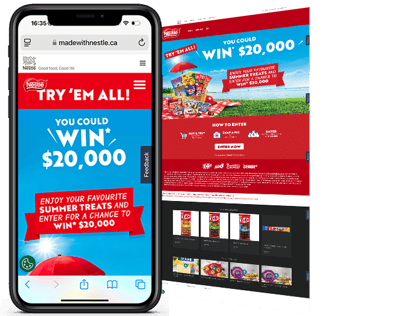
Nestlé created a receipt-based sweepstakes to drive trial and conversion across their entire confectionary product line. Consumers who purchased qualifying Nestlé products could upload receipts through a dedicated microsite or share a short essay explaining why they love Nestlé for the chance to win a $20,000 grand prize.
This campaign successfully increased product awareness and engagement while collecting valuable consumer purchase data to inform future promotions.
2. Members-only Sweepstakes (House of Suntory)
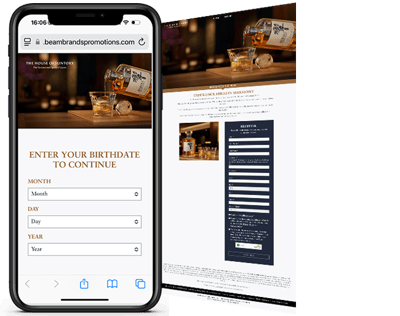
The House of Suntory ran a members-only sweepstakes giving loyalty program participants the chance to win tickets to an exclusive Hibiki event at Carnegie Hall. The simple registration process on an age-gated microsite generated significant engagement while reinforcing the value of their loyalty program membership.
3. Media Partnership Sweepstakes (Kellanova)
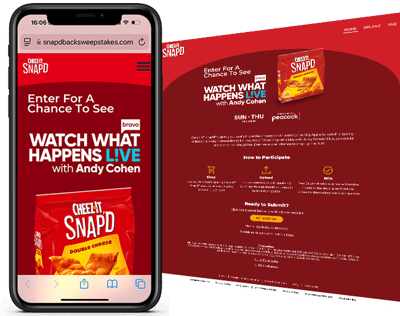
Kellanova incorporated a sweepstakes into its media partnership strategy to promote Cheez-It Snap’d – it's popular cheese chip. Customers could upload receipts of qualifying products to the promotion microsite for a chance to win a trip to New York and attend a live taping of a popular talk show.
The promotion has helped to improve brand engagement and product sales.
Raffles Revealed
Raffles bring a different kind of energy to promotions – one that’s tied to community and contributing to worthy causes. However, alongside this appeal comes unique legal considerations and strategic choices.
Looking at how they operate, where they’re most effective, and how others are using them helps clarify when a raffle might be the smarter move.
Advantages
- Effective fundraising: Direct revenue generation through ticket sales provides immediate financial support for charitable causes and nonprofit organizations.
- Community engagement: Local raffles strengthen community spirit and support worthy causes.
Challenges
- Strict legal regulations: Federal and state gambling laws severely limit who can operate raffles legally.
- Complex administration: Legal requirements for transparency, licensing, and financial reporting create substantial administrative burdens for organizers.
- Limited commercial use: Most states restrict raffle operations to licensed charitable organizations, preventing most brands from running them.
Types of Raffles
Traditional Raffles
Standard ticket-based raffles where participants purchase entries. Winners receive predetermined awards regardless of total ticket sales.
Online Raffles
Like traditional raffles but conducted entirely online. Digital platforms facilitate remote ticket sales and virtual drawings, expanding reach beyond local communities while maintaining compliance requirements.
Instant-win Raffles
Immediate gratification systems where participants find out if they’ve won immediately after purchasing a ticket – similar to scratchcards.
50/50 Raffles
Split-prize structures where winners receive 50% of total proceeds while the remaining funds support the organizing charity or cause.
Reverse Raffles
Elimination-style drawings where the last remaining ticket wins, organizers often use these at live events to build suspense.
2 Examples of Brand Promotions that Take Their Cue from Raffles
Although raffles are largely restricted to nonprofit organizations, there are elements you can include in other promotions to give them a unique edge.
1. Zero Gravity Chips (Doritos)
Doritos partnered with the Polaris Dawn space mission and St. Jude Children's Research Hospital on its limited-edition "Zero Gravity" Cool Ranch chips promotion.
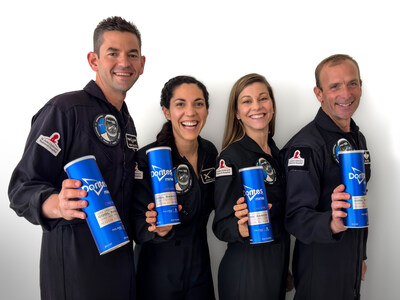
Consumers could obtain these special glow-in-the-dark canisters by making a $200 donation to St. Jude. Additionally, higher donation tiers offered exclusive rewards, such as mission-inspired memorabilia and even tins that had been flown in space. Doritos also contributed a $500,000 donation to support St. Jude's mission in childhood cancer research and treatment.
This campaign seamlessly combined charitable giving with fan engagement.
2. Store Display Clean-up (Feastables)
YouTuber and Feastables founder MrBeast encouraged fans to tidy up product displays featuring his snack bars. Participants who shared photos of their efforts on social media entered a $5,000 prize draw.
This promotion harnessed MrBeast’s vast social media audience to raise awareness of his products, while capturing the community-spirit and chance-based rewards of a traditional raffle.
Sweepstakes for the Win
For most brands, sweepstakes are the superior promotional strategy due to their broad reach and flexible implementation options.
While there are some regulatory hurdles to running a successful and compliant promotion, a specialized sweepstakes administration platform, coupled with expert guidance, can help you navigate them.

Subscribe for updates straight to your inbox