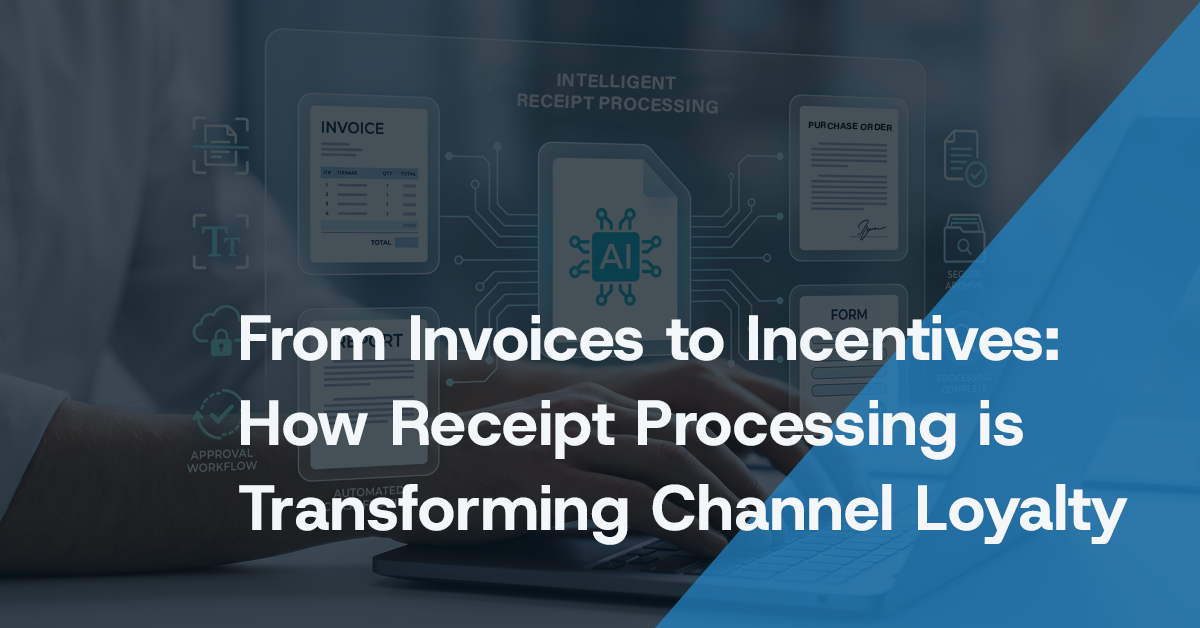
Every channel marketing team can tell you what shipped. Far fewer can tell you what actually sold.
That gap between sell-in and sell-through is where most B2B incentive programs quietly lose their value. Manufacturers ship product to distributors, distributors sell to dealers and contractors, and contractors sell to end customers. Somewhere in that chain, visibility disappears. What survives is a pile of PDFs, invoices, purchase orders, spreadsheets, and photographed receipts that someone on the marketing or operations team has to open, read, and manually key into a system before a single reward can go out.
Receipt processing is the infrastructure that closes that gap. Done well, it connects proof of purchase to validation, validation to reward, and reward to the kind of channel data that finally answers the question every channel marketer gets asked: is this program working?
The hidden problem with traditional Channel Incentive Programs
Most manufacturers have excellent visibility into sell-in. Shipment data, distributor orders, and purchase orders all live in an ERP or CRM system somewhere. What they lack is reliable visibility into sell-through: what a dealer, contractor, installer, or reseller actually purchased, installed, or resold to the end customer.
That blind spot creates three problems for channel and trade marketing teams.
Rewards move slowly. When claims arrive as scanned invoices or emailed photos, someone has to manually review each one before a partner sees a reward. Multiply that by hundreds or thousands of partners, and claim backlogs become the norm rather than the exception.
Visibility stays limited. Without SKU-level detail, marketing can't connect an incentive to the specific products it was designed to move. A rebate campaign built to drive adoption of a new product line looks identical, on paper, to one that simply rewards existing buying behavior.
Risk creeps in. Manual validation is inconsistent by nature. The same invoice reviewed by two different people on two different days can produce two different decisions, and duplicate or altered documents are easy to miss when reviewers are working through a queue under deadline pressure.
Receipt and invoice processing technology exists to solve exactly this chain: proof of purchase, validation, reward, data, and insight, all connected in one workflow instead of scattered across email inboxes and spreadsheets.
What is receipt processing in a B2B channel program?
It’s worth clearing up a common misconception first. In a B2B or channel context, "receipt processing" doesn’t mean scanning consumer grocery receipts. The technology needs to handle a much wider range of transaction documentation, including retail receipts, invoices, purchase orders, delivery orders, e-commerce order confirmations, and other proof-of-purchase formats partners might submit.
AI-powered OCR extracts the details that matter: product and SKU, quantity, purchase date, retailer or distributor, and transaction value. Program rules then apply automatically, checking whether the purchase qualifies for a reward, meets a spend threshold, or fits a tiered incentive structure.
Snipp’s platform is built around this broader definition. It supports receipt, invoice, and purchase order validation as part of the same workflow, and it uses that transaction data to build SKU-level reporting and verified purchase records that channel teams can actually act on, not just archive.
Why invoices and purchase orders matter to channel marketers
For a channel marketer managing dealers, distributors, or contractors, retail receipts alone rarely tell the full story. Invoices provide direct evidence that a dealer, contractor, or distributor purchased qualifying products, often at volumes and price points that consumer receipts never capture. Purchase orders add another layer of transaction detail and can be built directly into qualification and validation workflows, particularly for distributors submitting purchases in bulk. Combined with receipts and existing distributor data, these documents give a far more complete picture of what is actually moving through the channel.
The goal isn’t to digitize paperwork for its own sake. It’s to turn transaction documents that were previously dead weight in a filing system into structured, usable channel data.
Snipp’s B2B channel loyalty platform is built around this idea directly, supporting receipt, invoice, purchase order, and delivery order validation alongside digital rebates, tiered incentives, partner tracking, and fraud prevention in a single environment.
From manual claims to automated channel incentives
Here’s how the process works once purchase validation is automated end to end:
- A partner makes a qualifying purchase.
- They upload a receipt, invoice, or purchase order.
- AI extracts and validates the transaction data.
- Program rules determine eligibility.
- Fraud and duplicate claims are flagged automatically.
- Points, rebates, or rewards are issued without manual intervention.
- Marketing teams get real-time performance data on the program.
What used to take a claims team days now happens in seconds, and the partner experience changes accordingly. Instead of waiting on a review queue, a contractor or dealer gets a fast, predictable answer, which is often the single biggest driver of whether they bother participating in a program at all.
|
|
What does the data unlock for channel marketing?
Once purchase data is verified and structured, it becomes useful for far more than approving individual claims. Channel marketers can use it to understand which SKUs are actually selling, how sell-in compares to sell-through, and how product mix and adoption are shifting across the partner base. It also surfaces purchase frequency, partner participation, and incentive redemption rates, which together start to paint a clear picture of incremental sales and program ROI.
The same data helps flag which partners are engaged and which are at risk of drifting away, and it gives fraud and compliance teams a much earlier signal when something looks off, such as duplicate submissions or unusual claim patterns. Snipp’s receipt processing technology extracts SKU-level and basket-level detail from every validated transaction and connects it directly to reporting and analytics, so the same data used to approve a claim also feeds the dashboard a channel marketing director brings to a QBR.
The distinction matters here: this isn’t receipt-scanning software bolted onto a loyalty program. It’s the transaction intelligence layer that the rest of a modern channel program, from rewards to reporting, depends on.
What the industry data tells us
Channel engagement problems are well documented, and the data points to manual, hard-to-earn incentive structures as a real driver.
Research conducted by ITA Group with Channel Marketing Group found that 49% of contractors said joining a brand’s loyalty program increased their likelihood of purchasing from that brand over competitors, and 39% said it increased the volume of products they purchased from that brand. The same study found that 57% of contractors already base purchasing decisions on the rewards they expect to earn, and 83% said they’d be interested in joining a contractor loyalty program if one were offered. Yet roughly half of all contractors surveyed weren’t enrolled in any loyalty program at all (HVACR Trends).
That last figure is worth sitting with. Contractors clearly want to earn rewards for purchases they’re already making. If half of them aren’t participating, the friction usually isn’t the incentive itself. It’s the effort required to claim it: finding the right invoice, submitting it correctly, and waiting for someone to approve it.
Brand example:
IKO turns invoices and POs into a better Channel loyalty experience
IKO’s ROOFPRO program, run across the U.S. and Canada, needed to increase the speed and accuracy of invoice processing and reporting while improving satisfaction among both contractors and distributors. Snipp built a multi-country, multi-language B2B channel loyalty system to support it: contractors could submit photos of invoices or roofing purchase receipts to earn points, while distributors could submit bulk invoice uploads to accumulate points at scale. The system handled region-specific rebate rules down to the country, state or province, and city level, and participants could redeem earned points through direct ACH transfer or physical check.
For a channel marketer, the value here isn’t that invoices got processed faster, though they did. It’s that every submitted invoice became usable program data: a verified, SKU-relevant transaction the brand could reward and, just as importantly, measure. That’s what turns a loyalty program from a cost center into a source of channel intelligence. Read the IKO B2B Loyalty Program case study
Snipp has applied the same approach elsewhere in building materials and home improvement. In its work with DSI’s Westbury Pro Rewards program, Snipp managed contractor enrollment, invoice and receipt validation, quarterly rebate payouts, and ongoing reporting, giving DSI the same kind of verified, structured view into contractor purchasing behavior.
What should a modern B2B receipt processing solution include?
If you’re evaluating vendors, use this as a starting checklist:
- Receipt, invoice, and purchase order validation
- AI and OCR-based data extraction
- SKU-level purchase validation
- Configurable qualification rules by product, tier, or region
- Duplicate and fraud detection
- Automated claim approval
- Automated reward and rebate distribution
- Distributor and partner data integration
- Real-time dashboards and reporting
- A partner-friendly submission experience
- API and third-party integrations
- Multi-market and multi-language support
Snipp’s Channel Loyalty Platform brings these transaction-validation capabilities together with loyalty, rebates, segmentation, rewards, analytics, and fraud prevention, so a channel team isn’t stitching together point solutions from separate vendors just to get a claim approved and reported on.
Key takeaways
- Channel incentive program receipt processing goes well beyond retail receipts. Invoices, purchase orders, and delivery orders are often the more important source of channel transaction data.
- Automating validation cuts manual claims work and gives partners a faster, simpler experience.
- Verified transaction data connects incentives to actual purchases and sell-through, not just shipments.
- SKU-level data gives channel marketers real visibility into product performance and partner behavior.
- The strongest programs bring validation, rewards, fraud protection, and analytics together in one experience rather than several disconnected tools.
Frequently asked questions
Can receipt processing handle B2B invoices?
Yes. Invoices can be uploaded as photos or bulk files, parsed with OCR, validated against program rules, and used to automatically trigger a reward or rebate, the same way a retail receipt would be.
Can a B2B loyalty program validate purchase orders?
Yes. Purchase orders can be incorporated alongside receipts, invoices, and other transaction documentation, particularly for distributors submitting purchases at volume.
How does AI improve invoice and receipt processing?
AI-powered OCR extracts line-item detail such as product, SKU, quantity, and value from a document, applies program rules automatically, and runs fraud and duplicate checks, all in the time it used to take a person to open a single PDF.
Can receipt processing validate specific SKUs?
Yes. SKU-level validation lets a program reward specific products or product lines rather than treating every qualifying purchase the same, which is essential for programs designed to drive adoption of a particular product mix.
How does receipt processing reduce fraud?
It applies duplicate detection, cross-checks for suspicious submission patterns, and validates transaction details before any reward is issued. Snipp includes AI-driven fraud detection as a core part of its receipt processing and channel loyalty platform, rather than as an add-on.
Can receipt processing integrate with an existing loyalty or CRM platform?
Yes. It’s designed to connect with the systems already in place through APIs and third-party integrations, extending what a CRM or loyalty platform can do rather than requiring a brand to replace its existing tech stack.
What is the difference between receipt processing and rebate management?
Receipt processing validates the underlying transaction: what was purchased, by whom, and whether it qualifies. Rebate management then uses that verified transaction to calculate eligibility, approve the claim, and issue the payment. One confirms the purchase happened; the other decides what to do about it.
Turn every claim into channel intelligence
If your channel team is still relying on spreadsheets, PDFs, manual invoice reviews, or delayed distributor reports, it’s worth taking a closer look at the transaction layer sitting underneath your incentive program.
Snipp can validate receipts, invoices, and purchase orders, automate rewards and rebates, protect program value from fraud, and turn every verified transaction into channel data your team can act on.
Download the B2B Channel Loyalty Solution Sheet
See the Receipt Processing Demo: an interactive walkthrough of how a receipt, invoice, or purchase order becomes validated, structured purchase data in seconds.

Subscribe for updates straight to your inbox