Artificial intelligence is rapidly reshaping the shopper marketing ecosystem. What was once a collection of disconnected tools for promotions, media buying, analytics, and loyalty has evolved into a highly integrated technology stack powered by AI, first-party data, and retail media networks.
Brands and retailers are increasingly using AI to understand shopper behavior, optimize marketing investments, personalize engagement, and connect marketing exposure directly to verified sales. From predictive analytics and generative creative tools to retail media platforms, digital shelf optimization, and purchase-based promotions, AI now supports shopper marketing across the entire path to purchase.
These shifts are part of a broader transformation happening across the retail and marketing landscape. In our Shopper Marketing Trends and Strategies Guide, we explore how evolving consumer behavior, retail media growth, and data-driven incentives are reshaping how brands engage shoppers and drive measurable sales outcomes.
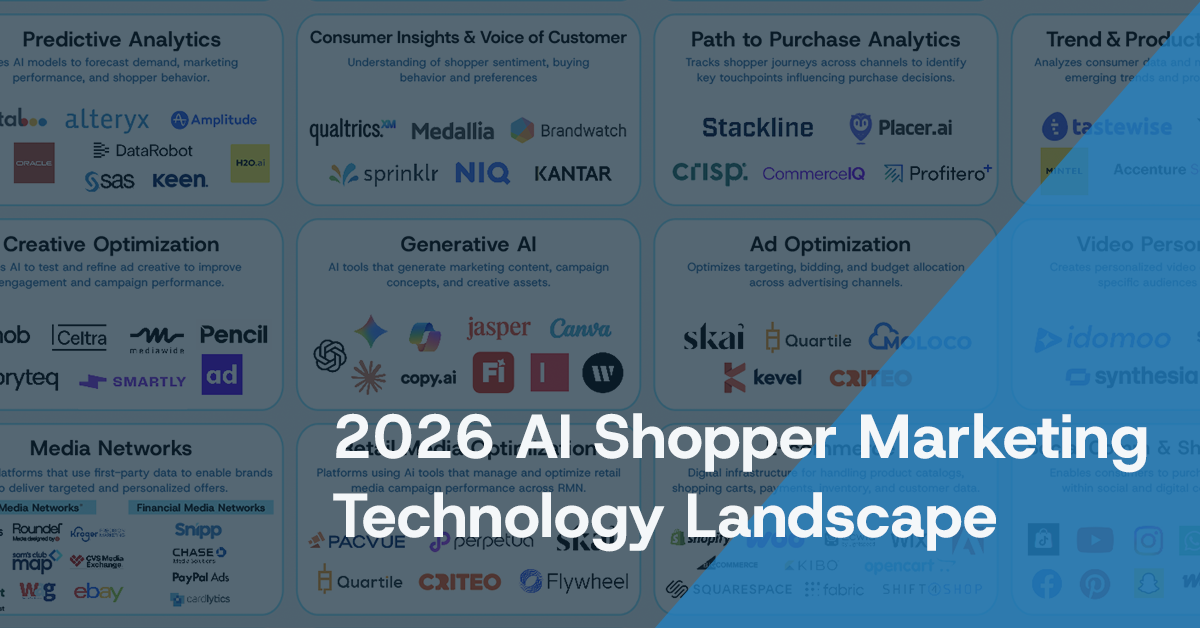
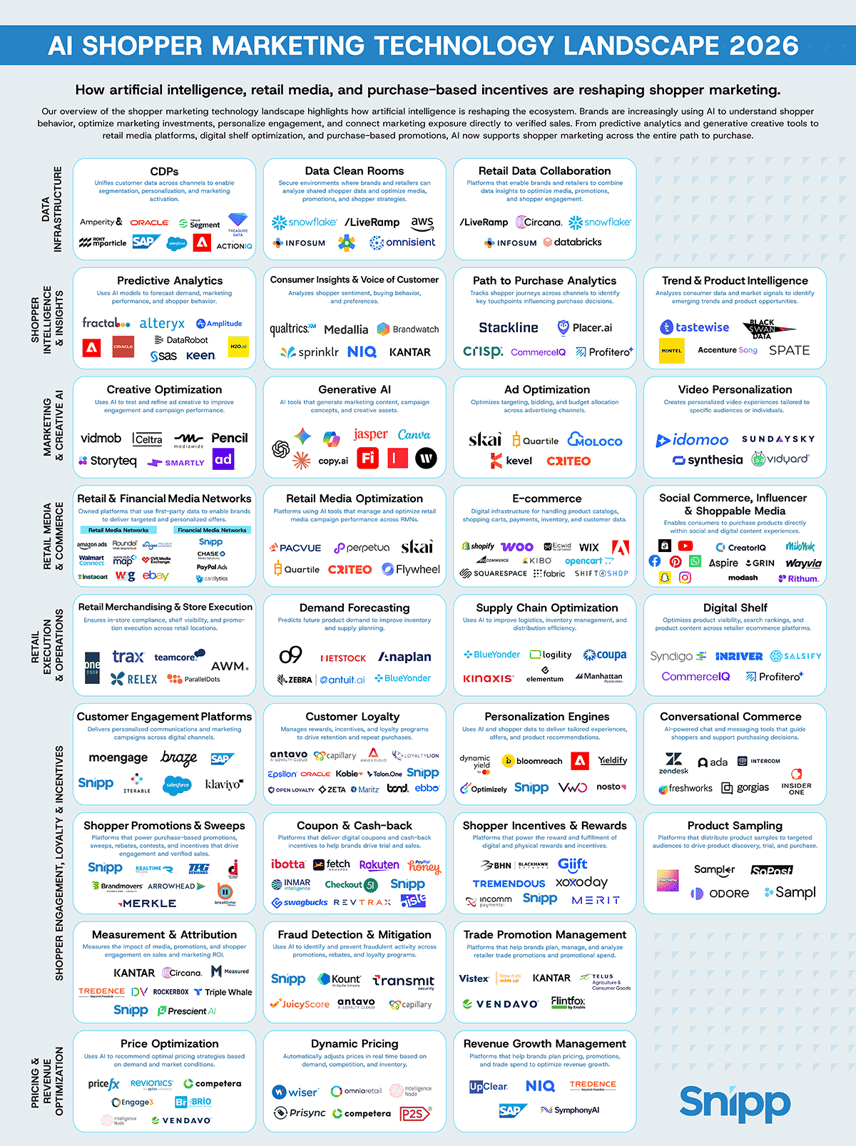
To help marketers navigate this rapidly evolving ecosystem, we created the 2026 AI Shopper Marketing Technology Landscape, highlighting the key categories and companies shaping the future of shopper marketing.
The landscape illustrates how AI technologies support brands from data and insights through marketing activation, commerce, engagement, and revenue optimization, ultimately helping marketers turn shopper data into measurable growth across digital, in-store, and omnichannel commerce.
Artificial Intelligence in Shopper Marketing Technology Landscape
How to read this Landscape
-
The AI Shopper Marketing Technology Landscape 2026 is organized to reflect how modern shopper marketing works, moving from data and insights at the top to engagement and revenue optimization at the bottom.
-
At the foundation are data platforms that collect and connect shopper data across brands and retailers. This data fuels the insights layer, where AI helps marketers understand shopper behavior, predict demand, and identify trends.
-
Next come marketing and creative AI tools, which help brands create content, optimize campaigns, and personalize messaging. At the center of the landscape are retail media and commerce platforms, where marketing increasingly connects directly to the point of purchase.
-
Further down are retail execution technologies that help ensure products are available and visible both in-store and online.
-
Finally, the lower layers focus on engagement, promotions, and incentives, where brands drive purchases through loyalty programs, rewards, coupons, and promotions, supported by tools that help measure performance and prevent fraud.
Click on the image for a PDF version. See below the graphic for details about each category included in the landscape.
AI in Shopper Marketing Technology Categories
Data Infrastructure
Customer Data Platforms (CDPs)
Customer Data Platforms unify and organize customer and shopper data from multiple sources, creating a single, persistent customer profile that can be used for segmentation, personalization, and marketing activation.
Data Clean Rooms
Data clean rooms are privacy-safe environments where brands and retailers can collaborate on shared data without exposing personally identifiable information. These platforms enable secure analysis of media performance, shopper behavior, and promotional effectiveness.
Retail Data Collaboration
Retail data collaboration platforms allow brands and retailers to combine first-party data to generate insights, optimize retail media campaigns, and improve shopper marketing strategies.
Shopper Intelligence & Insights
Predictive Analytics
Predictive analytics platforms use AI and machine learning to forecast demand, anticipate shopper behavior, and identify opportunities to improve marketing performance and inventory planning.
Consumer Insights & Voice of Customer
These platforms analyze customer feedback, reviews, surveys, and behavioral data to understand shopper sentiment, preferences, and purchase motivations.
Path-to-Purchase Analytics
Path-to-purchase analytics solutions track shopper journeys across digital, retail, and media channels to identify key touchpoints that influence purchasing decisions.
Trend & Product Intelligence
Trend and product intelligence platforms analyze consumer data, social signals, and market trends to identify emerging product opportunities and guide product innovation.
Marketing & Creative AI
Creative Optimization
Creative optimization platforms use AI to test, analyze, and refine marketing assets, helping brands improve engagement and campaign performance.
Generative AI
Generative AI tools assist marketers in creating content, campaign concepts, ad copy, and creative assets using artificial intelligence.
Ad Optimization
Ad optimization platforms use AI to improve advertising performance by optimizing targeting, bidding strategies, and budget allocation across digital channels.
Video Personalization
Video personalization platforms create customized video experiences tailored to specific audiences or individual viewers, increasing engagement and relevance.
Retail Media & Commerce
Media Networks
Retail Media Networks allow brands to advertise directly on retailer platforms using first-party shopper data. Financial Media Networks are also emerging, enabling brands to reach consumers within banking and payment ecosystems.
Retail Media Optimization
Retail media optimization platforms help brands manage and optimize campaigns across multiple retail media networks, improving performance and return on ad spend.
E-commerce Platforms
E-commerce infrastructure platforms power online storefronts, product catalogs, shopping carts, payments, and customer experiences.
Social Commerce & Shoppable Media
Social commerce platforms enable consumers to discover and purchase products directly within social media and digital content experiences.
Retail Execution & Operations
Retail Merchandising & Store Execution
Retail execution platforms help brands monitor in-store compliance, shelf visibility, and promotional execution across retail locations.
Demand Forecasting
Demand forecasting platforms use AI and predictive analytics to estimate future product demand and help brands optimize inventory and supply planning.
Supply Chain Optimization
Supply chain optimization platforms improve logistics, inventory management, and distribution efficiency using AI and advanced analytics.
Digital Shelf
Digital shelf platforms optimize product visibility, search rankings, and product content across retailer e-commerce websites.
Shopper Engagement, Loyalty & Incentives
Customer Engagement
Customer engagement platforms deliver personalized communications and marketing campaigns across channels such as email, mobile, and digital advertising.
Customer Loyalty
Loyalty platforms manage rewards programs, incentives, and loyalty campaigns designed to increase customer retention and repeat purchases.
Personalization Engines
Personalization engines use AI and customer data to deliver tailored experiences, offers, and product recommendations to individual shoppers.
Conversational Commerce
Conversational commerce platforms use chatbots and AI-driven messaging tools to guide shoppers through the purchase journey and provide real-time assistance.
Shopper Promotions & Sweepstakes
These platforms power purchase-based promotions such as rebates, sweepstakes, contests, and incentive programs designed to drive engagement and verified sales.
Coupons & Cash-back
Coupon and cash-back platforms deliver digital offers and cash-back incentives tied to verified purchases, helping brands drive trial and increase conversion.
Shopper Incentives & Rewards
Rewards infrastructure platforms power the fulfillment and delivery of digital and physical incentives such as gift cards and prepaid rewards.
Product Sampling
Product sampling platforms help brands distribute product samples to targeted audiences to drive product discovery, trial, and purchase.
Measurement & Attribution
Measurement and attribution platforms help brands analyze the impact of media, promotions, and shopper engagement on sales and marketing ROI.
Fraud Detection & Mitigation
Fraud detection platforms leverage AI to identify and prevent fraudulent activity across promotions, rebates, coupons, and loyalty programs.
Trade Promotion Management
Trade promotion management platforms help brands plan, manage, and analyze retailer promotions and trade spend to improve promotional effectiveness and return on investment.
Pricing & Revenue Optimization
Price Optimization
Price optimization platforms use AI and analytics to recommend optimal pricing strategies based on demand, competition, and market conditions.
Dynamic Pricing
Dynamic pricing systems automatically adjust product prices in real time based on factors such as demand, inventory levels, and competitor pricing.
Revenue Growth Management
Revenue growth management platforms help brands analyze and plan pricing, promotions, and trade spend to optimize revenue, margins, and overall commercial performance.
The Future of AI in Shopper Marketing
As AI continues to advance, the boundaries between marketing, commerce, and retail operations are becoming increasingly blurred. Retail and Financial Media Networks are transforming how brands reach shoppers, while AI-driven personalization and incentives are making marketing more measurable and performance-driven than ever before. At the same time, first-party data collaboration, purchase verification technologies, and fraud prevention tools are helping brands connect marketing engagement directly to real sales outcomes.
The AI Shopper Marketing Technology Landscape 2026 highlights how these technologies work together to help brands turn shopper data into measurable growth across digital, in-store, and omnichannel commerce.

Subscribe for updates straight to your inbox