Personalization has become the default expectation in loyalty. Customers increasingly assume that brands understand what they buy, how often they buy it, and what might interest them next. Generic promotions and one-size-fits-all rewards rarely create the same level of engagement they once did.
Research consistently reinforces this shift. 71% of consumers expect personalized interactions , and 93% of shoppers are likely to continue to shop with a brand when it provides personalized experiences.
At the same time, personalization has real financial impact. A Deloitte study found that 80% of consumers prefer brands that provide personalized experiences, and those customers tend to spend up to 50% more with those brands.
For loyalty and CRM leaders, the challenge is translating that expectation into something operational. Personalization requires more than dynamic email subject lines or segmented campaigns. It depends on reliable first-party data, accurate purchase signals, and the ability to trigger relevant incentives at the right moment. Interestingly, many loyalty programs have invested heavily in personalized messaging while leaving the underlying reward structure largely unchanged. Customers may see different emails, but they often receive the same incentives.
When those pieces come together, loyalty programs move beyond blanket rewards and start shaping behavior in measurable ways.
Below are six best practices that help brands deliver more relevant loyalty experiences while maintaining the discipline needed to measure impact.
1. Start with verified first-party purchase data
The foundation of meaningful personalization is knowing what customers actually buy. Many loyalty programs still rely heavily on declared preferences, demographic profiles, or high-level engagement metrics. Those signals are useful, but they often miss the most important indicator of intent: transaction behavior.
In practice, many brands default to surveys or preference centers because they are easier to collect and integrate. The result is personalization that looks sophisticated in dashboards but feels generic to customers.
Purchase-level data — whether captured through POS integrations, receipt validation, or SKU-level tracking — allows brands to see patterns that surveys and profiles rarely reveal. For example:
- Which products customers consistently repurchase
- Which categories they experiment with occasionally
- How frequently they return between purchases
- How they respond to past incentives
Across many incentive programs, transaction data often reveals behavioral patterns that CRM teams didn’t initially expect. For example, how frequently customers switch between product categories or how quickly they respond to targeted bounce-back offers.
These insights enable a much more precise approach to loyalty incentives. A customer who routinely buys a specific product line might respond best to early access or premium rewards. Someone who occasionally experiments across categories might respond better to trial incentives.
The key is to ensure that the purchase signal is accurate and connected to an individual customer profile.

Insight from Snipp’s programs
Across purchase-validated incentive programs, a few behavioral patterns tend to appear consistently:
- Customers who redeem targeted offers typically return faster than those who receive generic promotions.
- Category trial incentives often reveal unexpected cross-purchase behavior that traditional segmentation misses.
- Timely rewards delivered immediately after a qualifying purchase tend to generate stronger follow-on engagement than delayed incentives.
These patterns reinforce a broader shift in loyalty strategy: the most effective personalization is often grounded in verified purchase behavior rather than declared preferences.
Enfamil Family Beginnings Loyalty Program
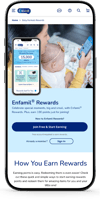 Enfamil enhanced its Enfamil Family Beginnings program to increase consumer engagement and improve the customer experience. Snipp's Loyalty Platform and Receipt Processing solutions enabled Enfamil to validate purchase and engagement and capture valuable first-party data, giving the brand deeper insight into buying patterns enabling more personalized member engagement.
2. Segment around behavior, not just demographics
Many brands already segment their CRM audiences. The next step is evolving segmentation from descriptive to behavioral.
Instead of grouping customers primarily by age, geography, or channel preference, high-performing loyalty programs focus on signals like:
- Purchase frequency
- Category engagement
- Promotion responsiveness
- Time since last transaction
- Basket size patterns
- Lapsed high-value customers may respond to reactivation incentives.
- Category explorers might be ideal candidates for cross-category trial offers.
- Consistent buyers may respond best to tier progression or exclusive access.
These behavioral segments often reveal meaningful opportunities.
For instance: One common pitfall is over-segmentation. Loyalty teams sometimes design dozens of micro-segments that look impressive in planning documents but become difficult to operationalize across CRM campaigns.
Segmentation works best when it balances precision with execution, identifying meaningful behavioral differences without creating so many segments that programs become difficult to manage.
Segmentation built around real purchase behavior allows incentives to feel naturally aligned with how customers already shop, making personalization more relevant without adding unnecessary complexity.
Nestle myPurina rewards program
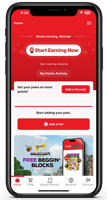
The Nestle myPurina rewards program allows members to upload receipts for purchases and earn points that can be redeemed for rewards such as coupons, pet products, and partner offers. Because rewards are tied directly to purchase activity— validated on Snipp's receipt processing platform— the program can segment members based on spending levels and product preferences, enabling more relevant rewards and engagement campaigns. This kind of behavior-based segmentation allows loyalty programs to evolve with each customer’s relationship with the brand.
3. Use trigger-based incentives to deliver timely relevance
Personalization becomes far more effective when incentives respond to customer actions.
Instead of sending periodic blanket promotions, many brands now deploy trigger-based incentives tied to specific events in the customer lifecycle.
Examples include:
- Bounce-back offers issued after a purchase
- Re-engagement incentives when purchase gaps exceed a threshold
- Category trial rewards when a customer buys within a new product line
- Frequency accelerators for customers nearing tier thresholds
The advantage of trigger-based incentives is timing. The reward arrives when it feels most relevant: shortly after a purchase, during a period of inactivity, or at a moment when the customer is close to achieving something within the program.
Designing these triggers is usually the easy part. The operational challenge is detecting the behavior quickly enough for the incentive to feel timely and relevant. If the reward arrives weeks after the triggering action, the moment of engagement is often lost. From an operational standpoint, these programs depend on the ability to detect and validate purchase events quickly so rewards can be delivered while the interaction is still top of mind.

A common operational challenge: Snipp can help!
Many loyalty teams design thoughtful trigger-based incentives on paper but struggle to execute them consistently. The difficulty is rarely the strategy. It’s the infrastructure required to detect qualifying purchase events quickly enough for the incentive to feel timely.
When incentives are delayed or disconnected from the original purchase moment, their impact often declines significantly. That’s why many brands are increasingly investing in systems like Snipp’s that can validate transactions and trigger rewards in near real time.
4. Personalize the reward structure, not just the messaging
Many loyalty programs personalize communications but keep the underlying reward identical for everyone.
That approach can limit the impact of personalization. Personalization increases customer satisfaction and creates emotional stickiness, making customers feel valued beyond the transaction.
In practice, different customer segments often respond better to different reward mechanics. For example:
- Frequent purchasers may value accelerated tier progression.
- Category explorers may respond to trial incentives.
- Value-focused shoppers may prefer cash-equivalent rewards or rebates.
- Brand enthusiasts may respond to exclusive experiences or early access.
Many programs personalize messaging extensively while keeping reward mechanics static because adjusting incentives dynamically requires more sophisticated infrastructure.
But when the reward itself reflects the customer relationship — not just the messaging — the incentive tends to feel more meaningful. 74% of consumers rank the ability to select their own rewards as important.
Adjusting the reward structure — rather than only the messaging — can significantly improve engagement. When the incentive reflects the customer's behavior or relationship with the brand, it feels less like a promotion and more like recognition.
Flexible reward catalogs and varied incentive mechanics make this kind of personalization easier to execute at scale.
5. Use missions and challenges to guide behavior
Some of the most effective personalized loyalty programs move beyond passive rewards and introduce structured challenges or “missions.” These incentives define a goal and reward customers for completing a set of actions.
Examples include:
- “Make three purchases this month and earn a bonus reward.”
- “Try two new product categories and unlock additional points.”
- “Spend $50 more this quarter to reach the next tier.”
When designed well, these incentives align customer behavior with specific growth objectives. Missions can encourage cross-category exploration, accelerate purchase frequency, or increase basket size.
Research shows why this matters. 74% of consumers say they are more loyal to brands when they have a positive experience with a loyalty program, especially when the program actively rewards engagement.
However, poorly targeted challenges can easily end up rewarding customers who were already likely to complete the behavior.
The most effective programs tailor missions based on the customer’s current relationship with the brand. A new customer may see a simple onboarding challenge, while a loyal customer might receive a more ambitious progression goal.
With the right data and tracking infrastructure, these incentives can dynamically adjust based on individual purchase behavior.
ITG Brands Winston Rewards, KOOLCOIN Rewards, and bluNation Rewards
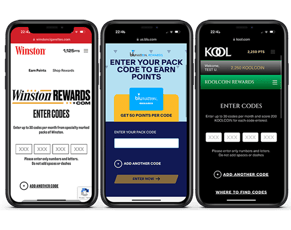 ITG Brands unified three loyalty programs — Winston Rewards, KOOLCOIN Rewards, and bluNation Rewards — onto a single platform to improve engagement and program management. Members earn points through activities such as entering pack codes and participating in promotions, which can then be redeemed for various rewards including digital and physical rewards in multiple denominations. Snipp enabled the program structure for ongoing engagement through bonus offers and promotional activities across multiple brands.
6. Measure incrementality from the start
Personalization can quickly become expensive if incentives are deployed without clear measurement. For loyalty teams, demonstrating impact usually means answering a simple question: did the incentive drive behavior that would not have happened otherwise?
Without measurement discipline, even well-designed incentives can end up subsidizing purchases that would have occurred regardless.
That’s where measurement discipline becomes essential. Effective programs typically incorporate:
- Control or holdout groups to validate incremental lift
- Offer-level reporting to compare performance across segments
- Redemption and repeat purchase analysis to understand downstream impact
Without holdout groups, it becomes difficult to separate true behavioral change from natural purchase patterns. When incentives are tied to verified purchase data, attribution becomes clearer. Loyalty teams can see not only those who redeemed a reward, but also how their purchasing behavior changed afterward.
This type of measurement allows programs to evolve over time, refining which incentives are deployed to which segments
Operational insights: What incrementality testing often reveals
When loyalty teams introduce control groups into incentive campaigns, the results can be surprising.
Some incentives generate strong incremental lift, while others primarily reward behavior that would have happened anyway. This is particularly common when offers are deployed broadly rather than targeted to specific lifecycle segments.
Over time, programs that consistently test incentives against holdout groups tend to refine their strategies—deploy fewer blanket promotions and more targeted behavioral triggers.
Personalization is becoming the backbone of modern Loyalty
As loyalty programs mature, the focus shifts from static reward structures to dynamic, behavior-driven engagement.
Personalization plays a central role in that evolution. When incentives reflect what customers actually buy — and respond to their behavior in real time — loyalty programs become far more relevant.
Delivering that level of relevance depends on three core ingredients:
- Reliable first-party purchase data
- The ability to validate and connect transactions to individual customers
- Infrastructure capable of delivering incentives quickly and securely
When those elements are in place, loyalty programs become more than a collection of rewards. They become a system for guiding customer behavior in ways that benefit both the brand and the customer relationship over time.
Summary: Key elements of effective personalized loyalty programs
|
Best Practice |
Primary Goal |
What It Enables |
Common Pitfall |
|
Start with verified purchase data |
Understand real customer behavior |
More accurate targeting and reward relevance |
Relying only on surveys or declared preferences |
|
Segment based on behavior |
Align incentives with shopping patterns |
More meaningful engagement across lifecycle stages |
Creating too many segments to operationalize effectively |
|
Deploy trigger-based incentives |
Deliver timely rewards |
Increased engagement and purchase frequency |
Delayed rewards that miss the behavioral moment |
|
Personalize reward structures |
Match incentives to customer motivations |
Higher redemption and perceived value |
Personalizing messaging but not the actual reward |
|
Use missions and challenges |
Guide customer behavior intentionally |
Cross-category exploration and higher basket sizes |
Rewarding behavior customers would have completed anyway |
|
Measure incrementality |
Validate program effectiveness |
Data-driven optimization of incentive strategies |
Running campaigns without holdout groups or testing |
FAQs
1. What is a personalized loyalty program?
A personalized loyalty program tailors rewards, incentives, and engagement strategies based on individual customer behavior, purchase history, and lifecycle stage. Instead of offering the same rewards to every member, personalized programs adapt incentives to reflect how customers interact with the brand.
2. Why is first-party data important for personalized loyalty programs?
First-party purchase data provides the most reliable insight into customer behavior. Transaction-level data helps brands understand what customers actually buy, how often they purchase, and which incentives influence their decisions. This allows loyalty programs to deliver more relevant and effective rewards.
3. How do brands personalize loyalty incentives?
Brands typically personalize loyalty incentives by using behavioral segmentation and trigger-based rewards. For example, customers may receive: Re-engagement offers after periods of inactivity Category trial incentives based on purchase history Missions designed to increase purchase frequency or basket size These incentives align rewards with specific customer behaviors.
4. What is the difference between personalization and segmentation in loyalty programs?
Segmentation groups customers into categories based on shared characteristics, such as purchase frequency or category engagement. Personalization uses those segments — and sometimes individual customer data — to tailor incentives, messaging, and reward structures. Segmentation is the strategy; personalization is the execution.
5. How can loyalty teams measure whether personalized incentives are working?
Measurement typically involves comparing behavior between customers who receive incentives and those who do not. This often includes: Holdout or control groups Redemption tracking Repeat purchase analysis Incremental revenue measurement These methods help determine whether incentives truly change behavior or simply reward existing purchasing patterns.
6. What are common mistakes when implementing personalized loyalty programs?
Some of the most common challenges include: Over-segmenting audiences in ways that are difficult to operationalize Personalizing messaging without changing the reward structure Delivering incentives too late after the triggering behavior Running campaigns without incrementality testing. Addressing these issues helps ensure personalization delivers measurable results.

Subscribe for updates straight to your inbox