Edit

Lifestyle Pivots & Regulatory Shifts:

Alcohol Industry Trends & Strategies

U.S. & Europe

Share

Introduction

For the alcoholic beverage industry, the “reset” narrative we spotlighted last year has hardened into something more structural in 2026: moderation is mainstreaming, habits are shifting, and value-seeking is now baked into behavior–all layered on top of ongoing policy shifts and tariffs. Even when consumers "treat themselves," they're doing it more selectively, choosing the right occasion, the right price point, and the right format.

But it's not all doom and gloom for industry marketers. People still want to gather, they're just drinking differently. That means brands still have room to grow, but they have to earn it harder. In this “subdued but opportunity-rich” reality, winning brands are selling meaning: occasions, identity and cultural membership. To help navigate these shifting cultural forces, we’ve put together a primer on the key trends reshaping alcohol demand across the U.S. and Europe, along with the marketing playbooks proving effective right now.
Click here to download a pdf of this report.

People holding various colorful cocktails

The Alcohol Industry Landscape


US: Volume Down, but the Behavior Story is Changing

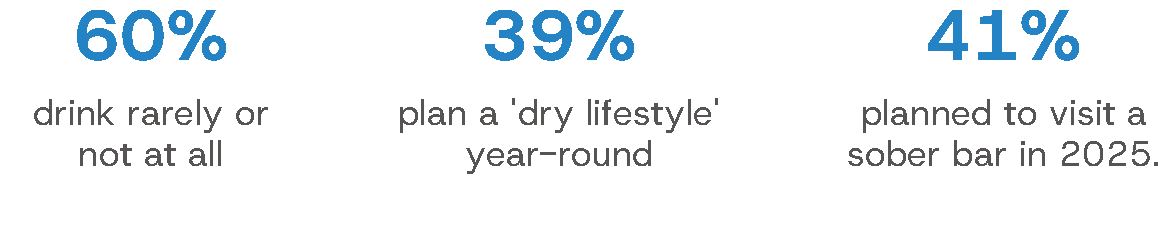
The key takeaway for the US market in 2026 is that fewer people are drinking, and those who are drinking are making more deliberate choices.
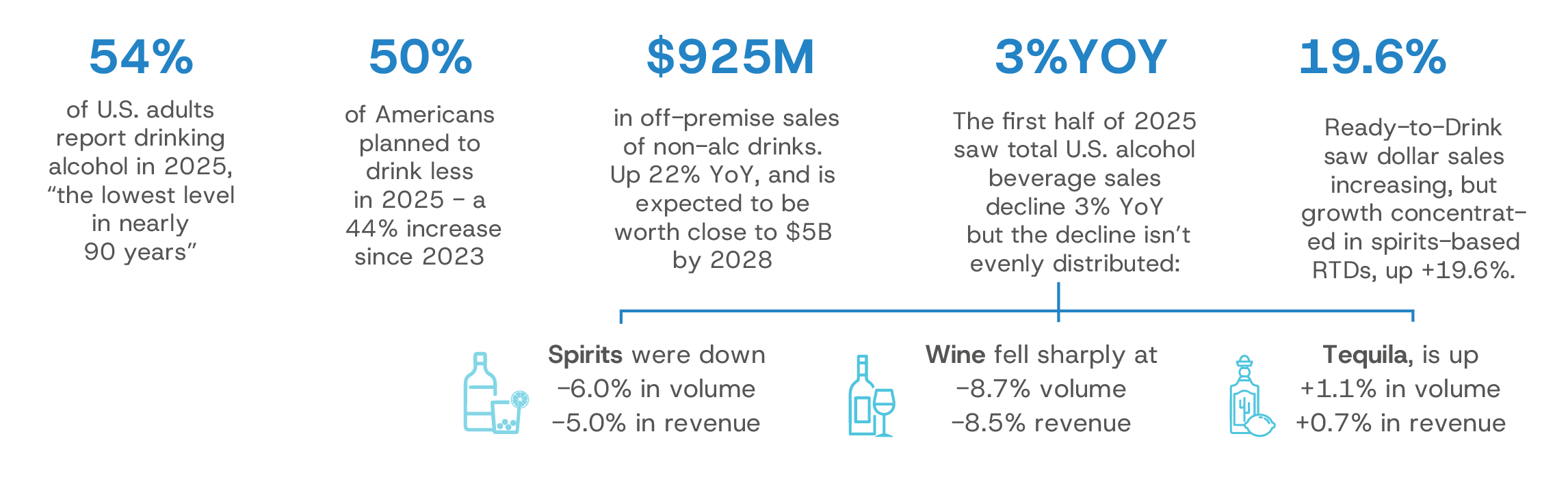
US  Alcohol Market

Europe: Flat Consumption, Heavier Constraints

Europe is dealing with twin challenges: soft consumer demand and simultaneous shifts in supply, pricing, and regulation.
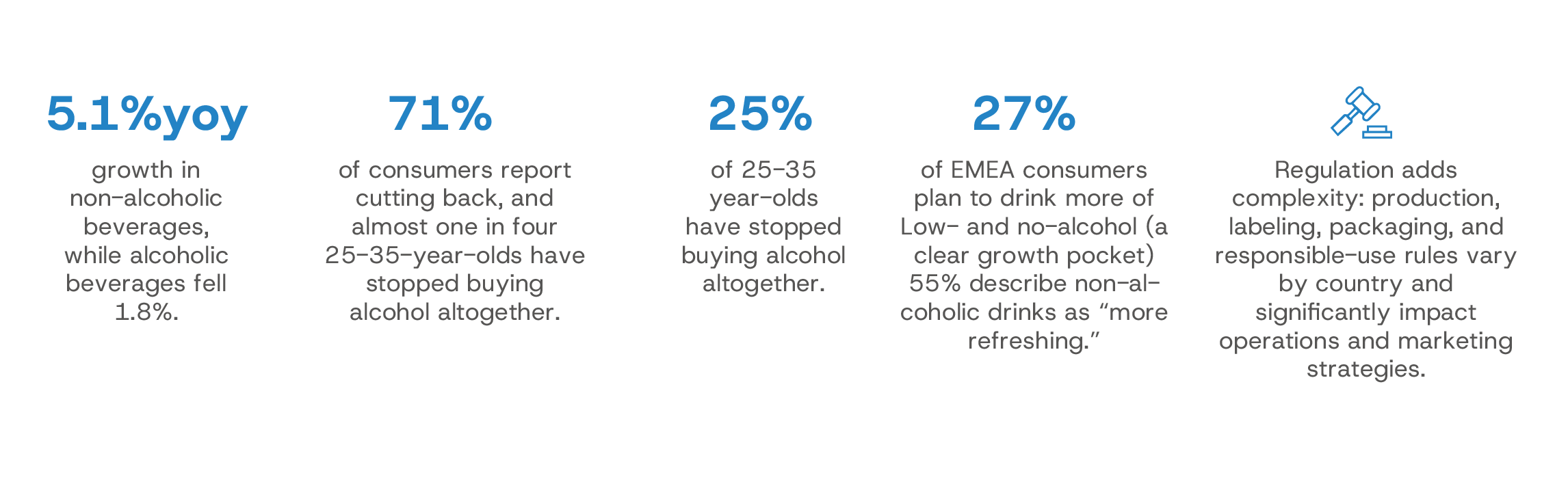
Europe  Alcohol Market

Alcohol Industry Marketing Strategy

10 Alcohol Marketing Strategy Playbooks for the Modern Drinker

These playbooks come from campaigns working right now: brands reaching consumers who drink less, expect more, and buy based on identity, not product.
1

Treat Moderation as Not a January-only behavior

Consumers aren’t quitting entirely, they’re “tempo drinking”, i.e. mixing alcoholic and non-alcoholic within the same occasion, and using abstinence windows as a lifestyle choice rather than a one-month challenge. The data backs this up: 92% of Non Alcohol buyers also purchase alcohol-containing products. Winning brands are treating moderation as re-patterned demand with different timing, different formats, and different cues (lighter, cleaner, functional, premium-when-it-counts). The goal is to win more moments within the same consumer’s week by making “switching” (alc → NA → alc) feel normal, social, and frictionless.

Make trial effortless with retail prompts and digital flows that help discoverability.

Athletic Brewing’s “Athletic January”Athletic frames moderation as mainstream and positions NA beer as something you choose, not something you settle for. Its Athletic January idea (“there’s nothing dry about it”) removes the sacrifice narrative and plays up playfulness. The brand reinforces it with heavy sampling and trial, suggesting people “Ask for Athletic” in bars.

Design for “tempo drinking” by giving people an easy non-alcohol choice within the same social moment.

Heineken 0.0’s “0.0 Reasons Needed” – Heineken 0.0 is positioned as part of the core Heineken family, making switching within the same occasion feel normal. The campaign uses humor to destigmatize choosing NA, with three spots (“Work,” “On a Diet,” “Driving”); the latter two drove 42–43% positive consideration, and an analysis by iSpot found the ads lifted brand recognition to nearly 9 in 10 general-pop viewers.

2

Own an Occasion, Not Just a Category

If consumers are drinking less, the fight isn’t just for share of wallet—it’s for share of moments. The brands gaining ground aren’t targeting demographics harder; they’re engineering their presence around micro-occasions (tailgates, pregame rituals, Friendsgiving, girls’ night in, etc.) and building the product, creative, and activation to fit those moments precisely.

Treat each occasion like a behavior chain: Lead-in (what triggers the moment, what gets bought) ––> In-the-moment (what’s shared, shown ––> After (how you turn one moment into the next—with retargeting cues)

Bud Light — “Bring Home the Official Tailgate”: Bud Light makes sure it doesn’t just show up at game day; it builds a tailgate system fully packaged with team cans, QR-led giveaways, and big hardware stunts. That means the product becomes part of the ritual, not just a beverage choice.

Guinness (UK) —“A Lovely Day for a Guinness”: Guinness leaned into the match-day moment with a Premier League-timed platform designed to make the brand feel like part of the communal viewing experience, not just the drink you pick up.

Heineken – “Could Have Been a Heineken”: Heineken's research found 54% of respondents said their most fulfilling conversations occurred IRL —yet 49% send voice notes instead. Using the annoyance of long WhatsApp voice notes as the trigger, the campaign converts friction into action: trade 3+ minute notes for free beer and bar recommendations. The brand isn’t advertising connection; it’s engineering it.

Molson Coors —“Just Bring the Beer” positions beer as the no-fuss solution for holiday stress, informed by data that 74% of millennials and Gen Z prefer experiences over traditional gifts. Its message: 'There are hunters and there are gatherers. You are neither.' The campaign is about making the decision effortless when people are overwhelmed.

3

Partner for Cultural Credibility

Traditional advertising can still build awareness. But cultural partnerships are what make a brand feel current, especially with younger consumers whose attention is organized around creators, formats, and communities, not brands. A useful filter: if the idea still works (and people would still share it) even without your logo, it’s a partnership that makes sense.

Choose parters with built-in trust, then contribute something the audience already values, e.g. entertainment, access, utility, or status.

Johnnie Walker + Sabrina Carpenter: this tie-in wraps the brand in a “golden age of spirits advertising” aesthetic (grainy film, old-school sound) that feels like a deliberate creative world, not a product placement. Sabrina brings present-day relevance, the vintage treatment signals heritage and confidence, and IRL activations during the singer’s tour offer her versions of classic whisky cocktails to a new audience.

Bulleit + First We Feast: A content partnership that plugs into an established cultural platform (Sean Evans / the Hot Ones universe) rather than trying to manufacture credibility from scratch. The series uses host Sean Evans to interview cultural voices in a format people already trust and enjoy, in order to make whiskey feel native to conversation and community.

Barefoot Wine + NFL: Now in its fourth year, this partnership is built to make wine feel less formal and more part of everyday American culture. By expanding beyond a single national tie-in to local team sponsorships, the brand is using sports culture to make wine feel like a normal part of that setting— not an out-of-place alternative.

4

Lead With Values, Not Just Liquid Specs

With people drinking less and choosing more deliberately, the brands breaking through are signaling conviction. That might mean an explicit social stance or a deep commitment to place, craft, and identity. Either way, it has to be genuine–consumers are wary of performative cause marketing and have sharp authenticity filters. They're asking: What does this brand stand for? Does it align with who I am? In a sea of interchangeable options, values become a filtering mechanism.

Turn your brand into a signal people can participate in

BRLO — "Less Hate, More Hops"(Germany): For its 10th anniversary, Berlin craft brewery BRLO tied its beer pricing to Germany’s 2025 federal election results: the fewer votes the far-right AfD receives, the cheaper the beer becomes. Rolled out across OOH, social, and digital, it turns a purchase into a visible stance–and gives people a clear reason to share and engage. The activation also fits BRLO’s broader positioning around inclusion and community, so it reads as consistent rather than opportunistic.

Root your brand in place and heritage:

Żubrówka — "Explore The Wild Side" (Poland): Żubrówka took a different approach to conviction: doubling down on provenance and heritage. The brand's first major campaign in 15 years centered on its connection to the Białowieża Forest, one of the last primeval forests in Europe, and the European bison. The campaign showcases genuine connection to place in a category often criticized for commoditization.

5

Normalize Non-Alcoholic With Sober Celebrity Credibility

Celebrity-backed brands have often outperformed in fast-growing categories where consumers want guidance on what to choose. Non-alcoholic is exactly that kind of category: crowded, still a bit confusing, and socially loaded. A sober (or sobriety-adjacent) celebrity can do what a paid endorser can’t: make the choice feel normal, social, and low-stakes. They aren’t acting sober for a campaign, and their credibility makes NA feel like a confident choice, giving consumers permission to switch without explanation.

Charlie Sheen – Wild AF Brewing leans directly into a real recovery narrative, framing sobriety as momentum and reinvention, not deprivation. The messaging makes the product feel like an empowered choice rather than a substitute.

John Mulaney –Years uses humor to puncture the stigma, making NA feel culturally current and socially easy. 'Years feels like a beer you reach for in a cooler in a driveway, watching someone who won't get a gas grill try to light the coals,' he says. That's the tone: a good time, just without alcohol.

Tom Holland – Bero skips the recovery narrative entirely, leaning on broad mainstream appeal. The brand benefits from his massive Gen Z reach while keeping the tone approachable and lifestyle-forward: NA as default, not exception.

6

Design for the Feed, Not Just the Shelf

For a meaningful share of 18–34 consumers, a “new experience” doesn’t feel complete until it’s shareable. If your product doesn’t photograph well, read clearly on a phone screen, or signal a vibe instantly, you’re leaving discovery on the table (even if you win at the shelf). Statistics show over one in three Gen Z and millennials say social media is the most effective advertising channel used to inform them about new NA beverages.

Create shareable triggers:

Kahlúa x Dunkin' telenovela: the campaign is a story engine with a nonsensical drama designed for social sharing and conversation -- built for clips, reactions, and reposts. Actress Salma Hayek bursts into a melodramatic scene to reveal the 'imposter' bottle is really Kahlúa Dunkin' Caramel Swirl Cream Liqueur.

Make the pack an instant social thumbnail:

Surfside — “sunset stripes” The can design is the brand in the case of Surfside. Its distinctive multi-colored horizontal stripes evoke a beach sunset ("sunshine in a can"), and make it recognizable in a split second–so every photo, cooler shot, or party post doubles as advertising.

818 Tequila — “Free the Nip”: Instead of treating 50ml bottles as a convenience format, 818 reframed them as expression and identity—fashion accessories with collectible bag charms, tapping into Gen Z's 'little treat culture' , alongside Labubu dolls and lip gloss keychains. These mini bottles are designed to show up in photos the way those little treats do.

7

Treat On-Premise as the Discovery Engine, Not Just a Channel

As drinking becomes more selective and situational, bars and restaurants are regaining influence as decision environments. Off-premise still dominates (62.74% in Europe, in 2025) but on-premise is where consumers are most likely to discover something new and trade up. Those moments carry into retail: 61% of U.S. consumers say they’ve purchased a brand in-store after first trying it in a venue.

Incentivize bartenders as trusted influencers: A single recommendation can convert uncertainty into a confident choice, especially for newer formats and premium tiers.


Diageo – World Class: The brand’s global competition platform builds prestige and positions bartenders as high-trust advocates of premium spirits. Winners showcase how brands can translate product heritage into signature serves and immersive “perfect serve” moments.
Turn venues and events into conversion moments: On-premise + live events are where brands can engineer moments that build cultural membership.


Absolut + Coachella: Absolut created an immersive on-site venue “House of Cosmo”, built around its signature cocktail, amplified by Paris Hilton and cultural commentator Tefi Pessoa, with an opt-in SMS text line for festival tips—extending the activation beyond the festival grounds.


Jägermeister + Unearthed: The brand built a touring “Jägerhaus” for the UK festival circuit—a music-first venue showcasing emerging artists, DJs, and bands. With a VIP loft, custom cocktails, and an immersive entrance tunnel misted with the brand’s signature herb-and-spices, it became a repeatable, ownable branded experience.

8

Bridge Generations, Don't Segment Them

When fewer people are drinking overall, you can’t afford to market like only one age group matters. The campaigns that hold up tend to anchor themselves in shared occasions (game day, holidays, parties) and universal motivations, so the same idea can land with a 27-year-old and a a 57-year-old. Without feeling like it was made for someone else.

Make the occasion feel inclusive (not age-coded)

Lipton Hard Iced Tea — “Don’t Retire the Party”: Lipton uses older creators and “retirement house” humor to invites older drinkers into the fun instead of treating them as irrelevant–while also giving younger audiences something inherently shareable. The campaign uses a playful, cross-generational premise that unites Boomers and Millennials in the name of one shared passion: partying, ideally with a cold hard tea in hand.

Use cultural figures that already span age-groups

Bud Light — Peyton Manning: A familiar reference point across age groups: older audiences know Peyton from football, younger audiences recognize him from pop culture, commercials–even memes. The brand borrows that broad familiarity to make the campaign feel widely encompassing.

9

Treat Your Label as a Trust Tool, a Receipt, and a Re-Engagement Unit

The label is becoming your most consistent, highest-frequency consumer touchpoint—especially in channels where you can’t rely on paid media precision. In Europe, ingredient and nutrition disclosure requirements (often delivered via QR e-labels) are pulling packaging and QR pathways into the center of the experience.

Make the bottle easier to choose in five seconds

Barefoot Wine — “clarity at a glance”: In its packaging refresh, Barefoot leaned into recognizability and decision support: a bigger, more legible brand mark, plus tasting cues placed on the front label so shoppers can choose confidently without overthinking. The label does conversion work by reducing shelf confusion and speeding up selection—especially for non-expert buyers. Barefoot’s internal “mom test” captures the point: could a normal, busy shopper grab the right bottle quickly, without help?

Use QR as the expandable “back label”

Pernod Ricard QR as the compliant detail layer. The key play isn’t the QR itself; it’s the logic. Keep the physical label clean and confidence-building, and use the scan as the place to share deeper product information (e.g., ingredients, health messaging, sustainability practices) safely and compliantly.

Turn the QR path into an owned relationship (not just a fact sheet): Don’t let the scan end in a dead-end disclosure page. Build a clear next step that exchanges real value for opting-in — for example: serve suggestions, store locators, recipes, games/contests, perks, or limited drops. This is how the label becomes a genuine re-engagement channel.

Jim Beam – turning a scan into participation. Jim Beam wanted to engage and reward its consumers in a fun way. Snipp created an age-gated QR flow where consumers scan, register, and upload a photo to enter a sweepstakes draw. Rewards included a VIP distillery trip (behind-the-scenes tour), backyard games tournament, exclusive tastings, catered meals, and other bespoke experiences. 

10

Win the New Discovery Layer: Be Legible to AI (and Still Compliant)

Shoppers are increasingly using AI to narrow choices when they feel overwhelmed: they ask, get a shortlist, and only then decide where to buy. For alcohol brands, that creates a simple test: can a recommendation engine understand your product well enough to suggest it—and can you convert that interest in an age-gated, compliant way? One recent U.S. consumer survey from DRINKS reported that 31% of adults over the age of 21 have already used AI to aid in alcohol selection, and 71% would be interested in adopting the technology if offered by liquor stores and online retailers.

Reduce choice overload where decisions actually happen Retailers are actively building guided-choice tools that turn a few preference questions into a shortlist, helping consumers decide faster at the exact moment they’re wavering.

Marks & Spencer’s “Wine Finder(UK) is designed to match wines to stated preferences, reducing shelf paralysis and making trade-up feel safer because it’s anchored in what they like, not wine knowledge.

Virgin Wines (UK) partnered with Preferabli to power more personalized discovery, using preference-based recommendations to help shoppers find their taste in a bottle faster and come back for similar picks.

Make your product “machine-readable” without losing brand nuance: To earn recommendations–whether from retailer tools, marketplaces, or consumer AI–you need to build for clarity (clean inputs drive accurate outputs):

  • Structured product facts: ABV, format, style, flavor cues, key ingredients, provenance, and any sustainability claims.
  • Two–three descriptors that you want repeated correctly (e.g., citrus-forward, smoky, no added sugar, etc.).
  • Compliant conversion paths: age-gated landing/QR flows that turn curiosity into a relationship (recipes, pairings, store locators, limited drops).
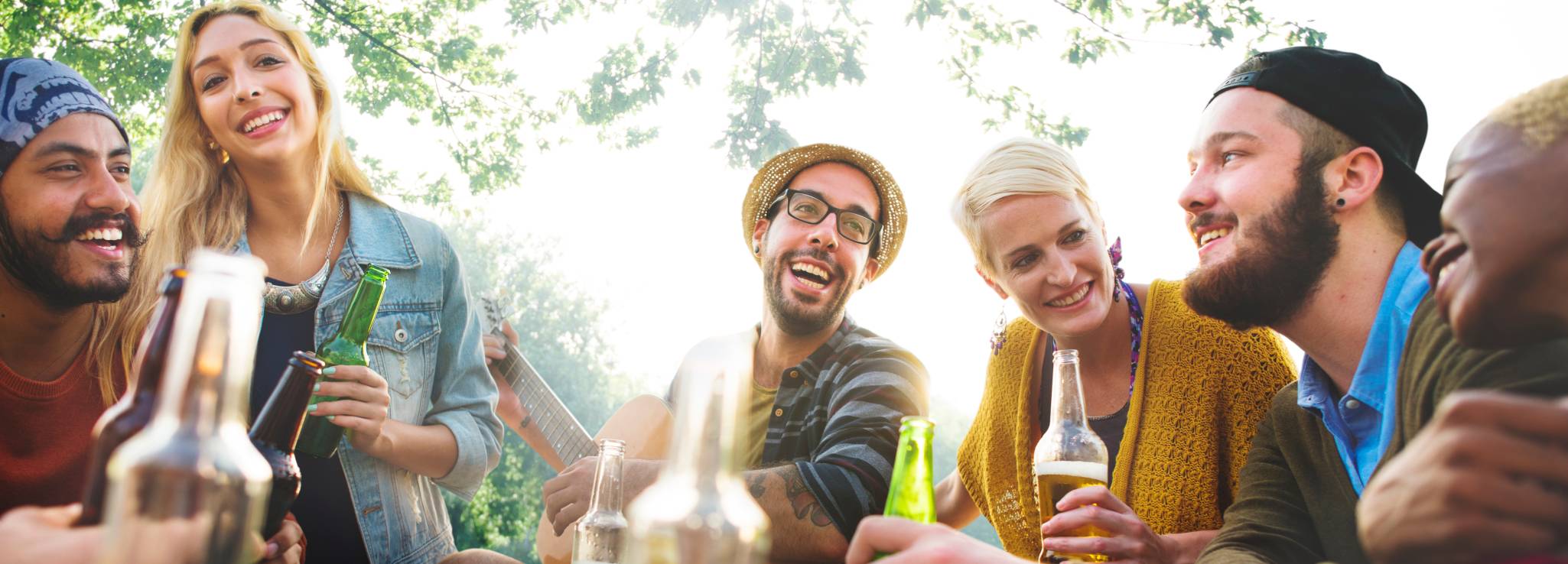
A diverse group of people holding drinks and chatting in the summer sun

Conclusion

The alcohol industry's center of gravity is shifting: from product to occasion, from liquid to lifestyle. The brands winning now aren't selling what's in the bottle; they're selling what the bottle makes possible.

In a market where volume is soft and scrutiny is rising, "make a moment" is the most reliable growth lever. Brands that treat the bottle as a prop in a larger lifestyle narrative will thrive. Those clinging to product-first messaging will find themselves speaking a language consumers no longer understand.
Click here to download a pdf of this report.

Snipp’s technology and marketing solutions help brands in highly regulated categories such as beer, wine, and spirits run compliant, high-performing promotions and loyalty programs. With built-in fraud protection, and omni-channel execution that delivers measurable ROI.

References

  • https://www.snipp.com/alcohol-industry-trends
  • https://www.theiwsr.com/insight/press-release/value-holds-steady-for-beverage-alcohol-in-h1-2025-despite-1-volume-drop/
  • https://www.theiwsr.com/insight/five-key-trends-shifting-the-beverage-alcohol-market-in-2025/
  • https://news.gallup.com/poll/693362/drinking-rate-new-low-alcohol-concerns-surge.aspx
  • https://www.prnewswire.com/news-releases/nearly-half-of-americans-plan-to-drink-less-alcohol-in-2025-up-44-from-2023-according-to-ncsolutions-302354616.html
  • https://nielseniq.com/global/en/insights/report/2025/non-alcohol-is-no-longer-a-niche-its-a-billion-dollar-movement/
  • https://www.theiwsr.com/insight/key-statistics-and-trends-for-the-us-no-alcohol-market/
  • https://www.bevindustry.com/articles/97649-nielseniq-report-find-total-beverage-alcohol-sales-3-for-2025-first-half
  • https://www.wswa.org/news/sipsource-2025-q2-report-highlights-persistent-category-headwinds-shifting-consumer-trends-and
  • https://www.wswa.org/news/sipsource-2025-q2-report-highlights-persistent-category-headwinds-shifting-consumer-trends-and
  • https://www.reuters.com/business/europeans-ditching-alcohol-taste-health-reasons-research-firm-says-2025-10-07/
  • https://nielseniq.com/global/en/insights/analysis/2025/winning-with-moderation-how-to-stay-relevant-in-emeas-evolving-on-premise/
  • https://www.marketreportanalytics.com/reports/european-alcoholic-beverage-industry-98406#summary
  • https://www.askattest.com/blog/research/gen-z-alcohol-trends
  • https://ncsolutions.com/press-and-media/americans-plan-to-drink-less-alcohol-in-2025/
  • https://nielseniq.com/global/en/insights/analysis/2024/the-4th-alcohol-category-ready-to-drinks-rtds/
  • https://www.ohbev.com/blog/rtd-market-2024-comprehensive-overview
  • https://www.theiwsr.com/insight/how-are-rtds-reshaping-seasonality-in-the-us/
  • https://www.theiwsr.com/insight/inside-the-iwsr-global-trends-report-key-drivers-for-beverage-alcohol-in-2025/
  • https://www.theiwsr.com/insight/premium-plus-beer-growth-stalls-but-opportunities-persist/
  • https://www.thespiritsbusiness.com/2025/06/tequila-growth-slows-to-1-by-mid-2026/
  • https://agriculture.ec.europa.eu/media/news/new-rules-wine-labelling-enter-application-2023-12-07_en
  • https://www.thespiritsbusiness.com/2025/12/iwsr-slashes-global-online-alcohol-sales-forecast/
  • https://www.theiwsr.com/insight/iwsr-projects-alcohol-ecommerce-channel-to-surpass-36-billion-by-2028/
  • https://www.reuters.com/business/retail-consumer/us-consumers-spent-118-billion-black-friday-says-adobe-analytics-2025-11-29/
  • https://www.euronews.com/business/2025/07/31/will-wine-and-spirits-be-hit-by-us-tariffs-tomorrow-even-the-eu-doesnt-know
  • https://www.independent.co.uk/news/world/americas/jim-beam-distillery-trump-tariffs-b2888451.html
  • https://www.beveragedaily.com/Article/2025/02/18/how-beverage-alcohol-companies-are-navigating-tariffs/
  • https://nielseniq.com/global/en/insights/report/2025/non-alcohol-is-no-longer-a-niche-its-a-billion-dollar-movement/
  • https://www.barchart.com/story/news/36668268/athletic-brewing-company-relaunches-athletic-january-campaign-making-modern-moderation-more-accessible
  • https://www.adsoftheworld.com/campaigns/going-dry-doesn-t-matter-why
  • https://www.ispot.tv/hub/how-heineken-0-0s-ad-campaign-is-winning-over-both-drinkers-and-non-drinkers/
  • https://www.marketingdive.com/news/bud-light-kicks-off-nfl-season-with-at-home-tailgates-peyton-manning/757047/
  • https://lbbonline.com/news/guinness-premier-league-match-days-real-fans-lovely-day-for-a-guinness
  • https://www.marketingdive.com/news/heineken-swaps-voice-notes-for-beer-in-latest-bid-for-irl-connections/808131/
  • https://thesiliconreview.com/2025/12/the-silicon-reviewdec-2025molson-coors-just-bring-beer-campaign
  • https://www.about-drinks.com/en/johnnie-walker-announces-global-partnership-with-superstar-sabrina-carpenter/
  • https://www.marketingdive.com/news/bulleit-partners-with-first-we-feast-for-content-series-about-risk-takers/758262/
  • https://www.winemakersshow.com/en/2025/10/28/barefoot-wine-nfl-partnership-redesign/
  • https://www.adsoftheworld.com/campaigns/less-hate-more-hops
  • https://www.thespiritsbusiness.com/2025/01/zubrowka-launches-six-figure-campaign/
  • https://www.theiwsr.com/insight/how-impactful-are-celebrity-backed-brands/
  • https://www.bevindustry.com/articles/97838-charlie-sheen-enters-non-alcohol-beer-market
  • https://beerconnoisseur.com/john-mulaney-years-na-campaign-launch/
  • https://www.foodandwine.com/tom-holland-launches-nonalcoholic-beer-brand-bero-8728780
  • https://www.circana.com/post/sober-curious-nation-alcohol-survey
  • https://www.prnewswire.com/news-releases/salma-hayek-pinault-returns-in-new-kahlua-and-dunkin-campaign-to-swirl-up-the-drama-302590098.html
  • https://479700.web09.swisscenter.com/Presse.php?ID=2304/818-Tequila-Announces-Release-of-50ML-Bottles-of-Reposado-and-Blanco-on-8-18-Day
  • https://adsofbrands.net/en/ads/lipton-don-t-retire-the-party-2/16975
  • https://www.hollywoodreporter.com/business/business-news/bud-light-nfl-parachute-ad-peyton-manning-1236338992/
  • https://www.barefo
Edit

Let’s Work Together

Let's talk about how Snipp can help you engage your customers.